
Sufism: The Path of Spiritual Awakening
The Journey of Purifying the Soul to Experience Divine Reality
Sufism, known in Arabic as Tasawwuuf, is not a separate sect or an innovation; it is the inner, esoteric dimension of Islam—the very heart of the Prophetic message. While the outer dimension of faith (Shari'ah) provides the essential framework for a righteous life, Sufism is the science of bringing that framework to life. It is the path of Tazkiyat al-Nafs (purification of the soul), a profound spiritual discipline aimed at cleansing the heart of its veils and diseases, allowing the seeker to attain a state of direct, experiential knowledge of God.
"He has certainly succeeded who purifies himself, And mentions the name of his Lord and prays."— Qur'an 87:14-15
Its goal is the realization of Ihsan (Spiritual Excellence), a state described by the Prophet Muhammad (ﷺ) in the famous Hadith of Gabriel as "to worship God as though you see Him, for if you do not see Him, He surely sees you." It is the journey from intellectual belief to the certainty of direct experience.
The human heart is likened to a mirror, created to reflect the divine light. However, through heedlessness and attachment to the world, this mirror becomes covered in the rust of ego, pride, envy, and greed. The work of the Sufi is to polish this mirror through fundamental practices rooted in the Qur'an and Sunnah:
1. Dhikr (Remembrance): The constant remembrance of God. Commanded throughout the Qur'an, it is the primary tool for polishing the heart, bringing tranquility, and attuning the soul to the divine frequency.
"Verily, in the remembrance of Allah do hearts find rest." — Qur'an 13:28
2. Suhba (Companionship): The necessity of keeping company with a true spiritual guide and righteous companions. The path is treacherous and cannot be walked alone; the guide acts as a doctor of the soul, diagnosing and curing its hidden ailments.
"And keep yourself patient [by being] with those who call upon their Lord in the morning and the evening, seeking His countenance." — Qur'an 18:28
3. Khidmah (Selfless Service): Serving creation for the sake of the Creator. This practice shatters the ego, cultivates humility, and demonstrates the sincerity of one's love for God.
Prophet Muhammad (ﷺ) said: "The best of people are those who are most beneficial to people."
The Sufi path of inner transformation is not learned from books alone. It is a living science transmitted from heart to heart. For this reason, the role of a Spiritual Guide—known as the Sheikh, Peer, or Murshid—is of paramount importance. The Murshid is a "doctor of the heart" who has himself traveled the path, purified his own soul, and been given authorization (ijazah) by his own master to guide others.
A true Sheikh is a link in the Silsila, the unbroken golden chain of spiritual transmission that leads directly back to the Prophet Muhammad (ﷺ). This chain ensures that the teachings and the spiritual grace (barakah) are authentic and potent. The relationship between the guide and the disciple (murid) is formalized through an allegiance (bay'ah), symbolizing a commitment to follow his guidance in healing the heart's illnesses—such as pride, envy, and attachment—and replacing them with virtues.
"He who has no Sheikh, his sheikh is Satan."— Attributed to Bayazid Bastami
The Sheikh's role is not to be worshipped, but to be a mirror that reflects the murid's own spiritual state back to him, and to act as a clear channel through which the light and love of the Prophet (ﷺ) can reach the seeker's heart. By keeping the company (suhba) of the Sheikh, the seeker's journey is protected, accelerated, and brought to fruition, God-willing.
The Qadriya Fazliya Lineage
The Qadriya Fazliya order is a major branch of the illustrious Qadiriyya Tariqa, one of the oldest and most widespread Sufi orders in the world. It derives its name and immense spiritual power from the "Sultan of the Saints," Sheikh Abdul Qadir Jilani (RA) of Baghdad, whose teachings and grace have illuminated the hearts of millions for nearly a millennium.
Our specific branch, the "Fazliya," traces its spiritual authority through great saints of the Indian subcontinent, including the revered Peer Syed Barkat Ali Shah and his successor, Peer Syed Faiz Mohy Uddin Shah. This lineage is a river of divine mercy, flowing directly from the ocean of Prophetic knowledge, through the heart of Sheikh Abdul Qadir Jilani, and down through generations of saints to the present day.
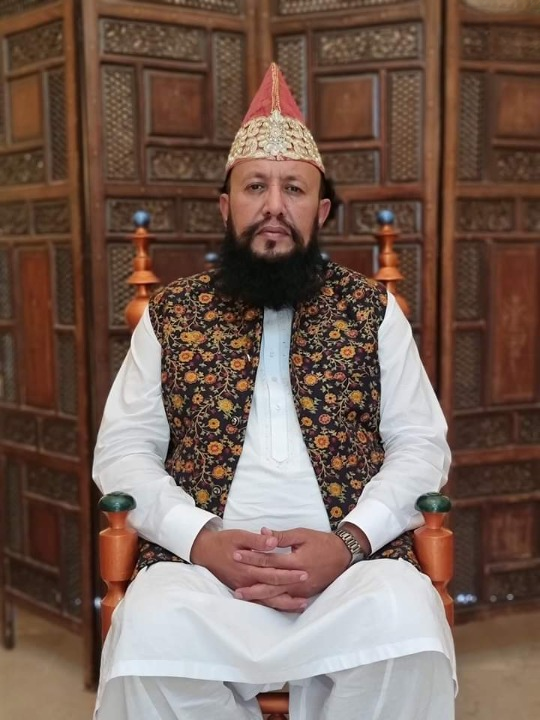
In every era, the Silsila is embodied by a living master who serves as the authorized guide for that time. Today, the Sajjada Nasheen (hereditary successor) and spiritual leader of the Darbar-e-Aliya Qadriya Fazliya is Syed Ishfaq Mohy Uddin Shah.
As the current link in this sacred chain, he is a spiritual doctor, a guide, and a living embodiment of the prophetic character. His mission is to transmit the timeless message of love, inner purification, and selfless service in a way that resonates with the challenges of modern life. He is a bridge between the profound spiritual heritage of the past and the pressing needs of the present.
"The true Sheikh connects you not to himself, but to the source from which he draws. He is a window, not the view."
Through his discourses, his personal example, and the spiritual energy that flows through him, he helps seekers to polish the mirror of their own hearts, guiding them away from the darkness of ego and towards the light of their true, divine potential.