

The Purpose of Human Life
Divine Intent Across the World's Faiths
Since the dawn of consciousness, humanity has gazed upon the stars and into the depths of its own soul, asking the most fundamental question: "Why are we here?" This timeless inquiry into the purpose of our existence is a thread that weaves through every culture, philosophy, and religion. While the answers are expressed in a beautiful diversity of languages and symbols, they often converge on a profound central theme: that life is not a random accident, but a meaningful journey with a divine intent.
Across the globe, the great spiritual traditions provide a map for this journey. They teach that our purpose is to transcend our limited, egoic selves and to discover a deeper reality—a reality of connection, of love, and of service. It is a call to move from a life of mere existence to a life of meaning, aligning our will with a will greater than our own.
In Islam, the purpose of life is unambiguously stated in the Qur'an: 'I did not create the jinn and humankind except to worship Me' (51:56). This concept of 'Ibadah' (worship) is comprehensive, encompassing not only ritual prayer and fasting but every action done with God-consciousness. Humanity is given the honored role of 'Khalifa' (vicegerent) on Earth, entrusted to maintain balance and act as a vehicle for God's mercy and justice. The ultimate goal is to live a life of submission (Islam) to the Divine Will, finding peace in this alignment.

In Christianity, the primary purpose is to glorify God and enjoy a relationship with Him forever. The Westminster Catechism famously asks, 'What is the chief end of man? To glorify God, and to enjoy him forever.' This is achieved through faith in Jesus Christ and by following his two greatest commandments: to love God with all one's heart, and to love one's neighbor as oneself. Life becomes an opportunity to reflect God's love and grace in the world.
In Hinduism, life's purpose is multifaceted, guided by four 'Purusharthas' (aims of human life): Dharma (righteous living), Artha (material prosperity), Kama (desire), and ultimately, Moksha (liberation). Dharma provides the ethical framework for life, while Moksha is the final goal: liberation from the cycle of reincarnation (samsara) and the realization of the unity of the individual soul (Atman) with the ultimate reality (Brahman).

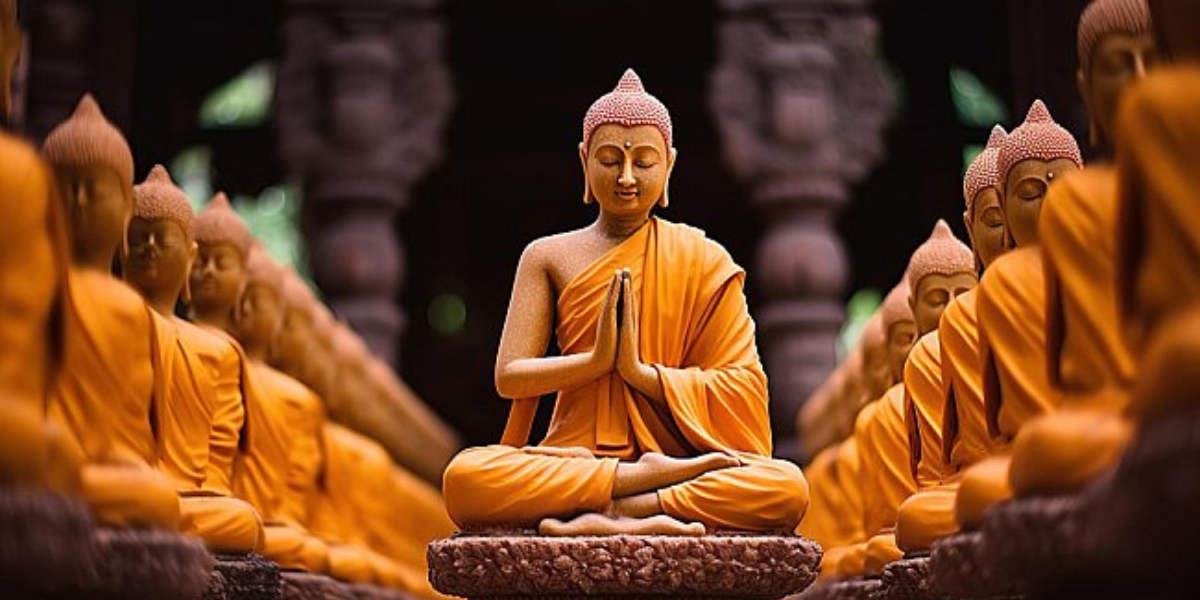
The core purpose in Buddhism is to end suffering (Dukkha) and attain Nirvana—a state of enlightenment and liberation from the cycle of rebirth. This is achieved by understanding the Four Noble Truths and following the Noble Eightfold Path, which includes wisdom, ethical conduct, and mental discipline. By eliminating craving, aversion, and ignorance, one awakens to the true nature of reality (emptiness, or Śūnyatā) and achieves a state of profound peace and compassion.

Sufism, the mystical heart of Islam, offers a beautiful and profound answer to the question of our purpose, encapsulated in a famous Divine Saying (Hadith Qudsi): "I was a hidden treasure, and I loved to be known, so I created the creation that I might be known."
From this perspective, the entire universe is a manifestation of Divine Love. The purpose of human life, therefore, is to be the eye through which the "Hidden Treasure" sees Itself, the heart through which It knows Itself, and the tongue through which It praises Itself. Our purpose is to become a polished mirror, free from the rust of ego, that perfectly reflects the beauty and majesty of the Creator. This is not a passive state, but an active journey of Ma'rifa (gnosis or intimate knowing) and Ishq (passionate, divine love). Life becomes a dynamic and beautiful love story between the soul and its source, with the ultimate goal being the dissolution of the self into the Beloved, realizing that there was never any separation to begin with.