
The Creation of the Universe
Perspectives on a Divine Beginning
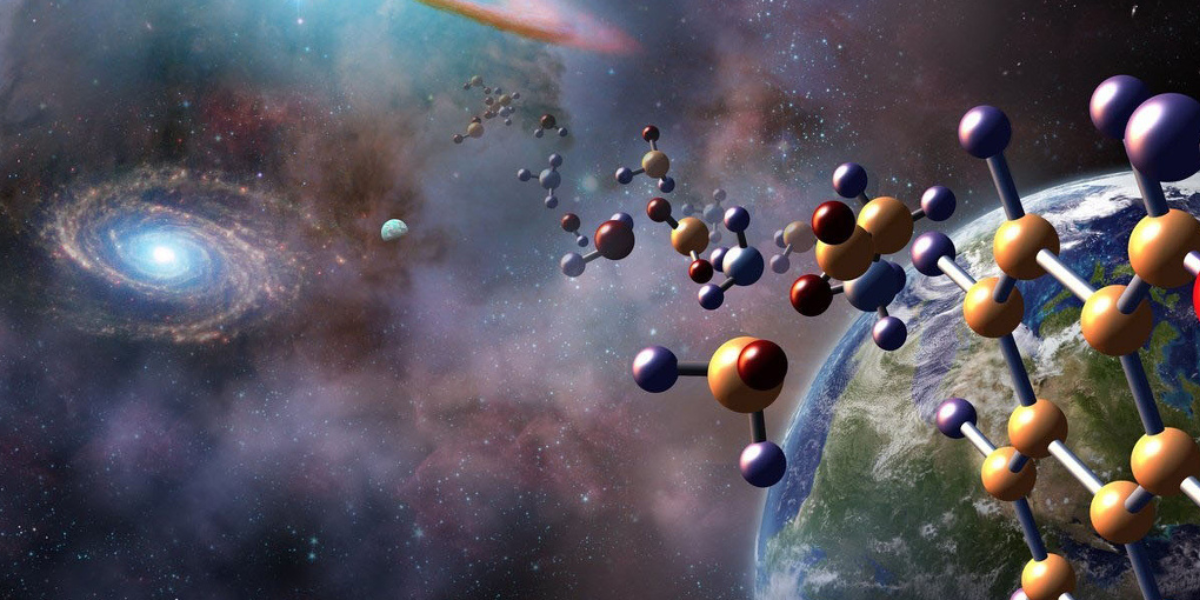
The question of our origin is the most fundamental inquiry of the human spirit. Before science offered its explanations, spiritual traditions across the world provided profound and beautiful narratives about the birth of the cosmos. These stories, though varied in their details, share a common thread: the universe is not a random accident but a meaningful manifestation of a divine reality. They invite us to see the world not as a collection of inert matter, but as a sacred tapestry, woven with purpose and intent by a higher power or principle.
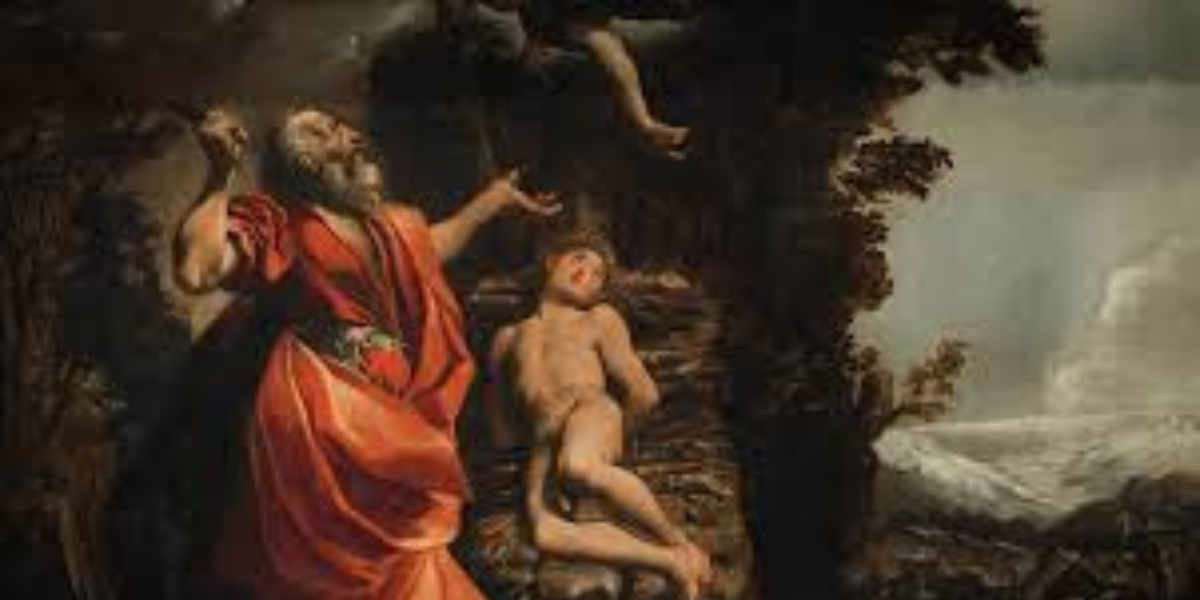
In these faiths, the universe is brought into existence through a sovereign act of God's will. The book of Genesis speaks of God creating the world in six days, culminating in the creation of humanity. The Qur'an powerfully states God's command as 'Be! and it is' (Kun Faya Kūn), emphasizing that creation is an effortless, instantaneous act for the Almighty. This perspective highlights a universe that is purposefully designed, ordered, and sustained by a single, transcendent Creator.
'Is not He who created the heavens and the earth able to create the like of them? Yes, and He is the Knowing Creator. His command is only when He intends a thing that He says to it, 'Be,' and it is.' (Qur'an 36:81-82)
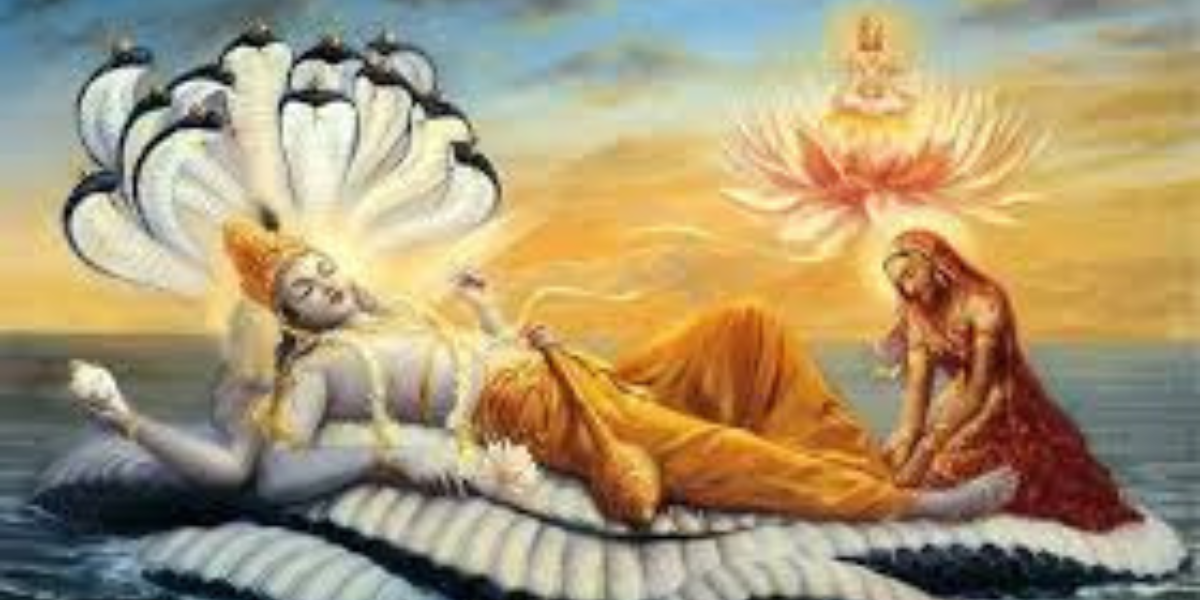
Hindu cosmology presents a cyclical view of time, with universes being created, destroyed, and recreated in an endless series. One of the most powerful images is that of Lord Vishnu sleeping on the cosmic ocean. As he dreams, a lotus flower emerges from his navel, and from this lotus, the creator god Brahma is born. Brahma then proceeds to form the universe. This signifies that the universe is a projection of the Divine Consciousness, a grand cosmic dream.
In the beginning, this universe was Brahman, one and infinite... From that plenitude, he created all the worlds.
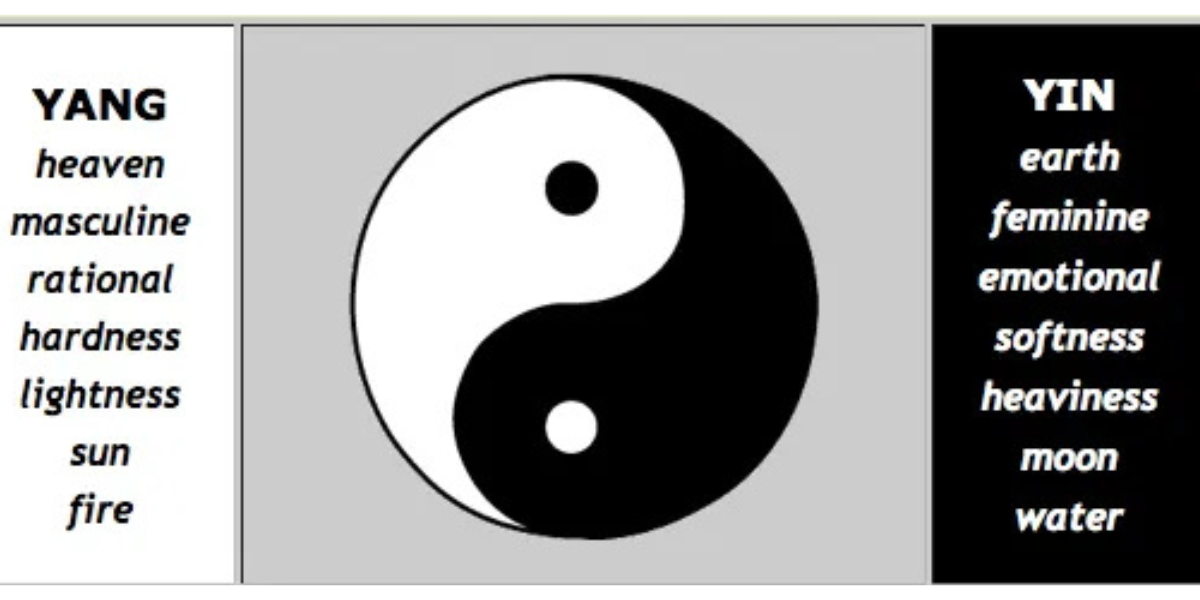
In Taoism, the origin of the universe is not an act of creation but a natural, mysterious unfolding from a formless, eternal source known as the Tao. The Tao gives birth to the One (the primordial unity), the One gives birth to the Two (Yin and Yang), the Two give birth to the Three (heaven, earth, and humanity), and the Three give birth to the 'ten thousand things'—all of manifest existence. The universe is not made by a creator but flows organically from this ultimate principle.
'The Tao gives birth to One. One gives birth to Two. Two gives birth to Three. Three gives birth to all things.' (Tao Te Ching, Chapter 42)
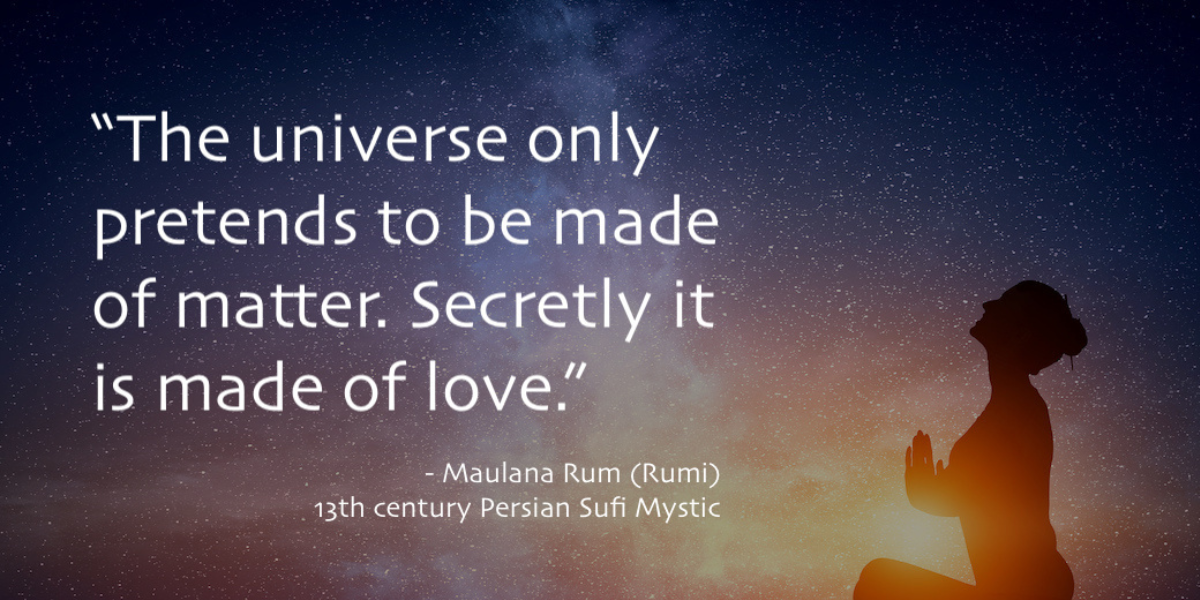
Sufism, the mystical dimension of Islam, offers a deeply intimate perspective on creation, summarized in a famous Divine Saying (Hadith Qudsi): "I was a Hidden Treasure, and I loved to be known, so I created creation that I might be known."
From this viewpoint, creation is an act of love. It is the unveiling of the Divine Reality from a state of hiddenness into manifestation. The universe is not separate from God but is the very locus of His self-disclosure. Every atom, star, and soul is a mirror reflecting the infinite attributes of the "Hidden Treasure." The purpose of creation, particularly humanity, is to be the conscious observer of this beauty, the heart that "knows" the Treasure, and the tongue that praises it. This transforms the universe from a mere physical space into a love letter from the Divine, waiting to be read by a sincere heart.
"The universe is a grand book. He who does not travel has read only one page."— Saint Augustine